Waste segregation at the source is one of the most important steps in modern waste management. The Two Bin and Three Bin system provides a simple and effective way for households, businesses and institutions to separate different types of waste before collection.
This approach allows recyclable materials, organic waste and general waste to be handled separately, improving the efficiency of recycling operations and reducing the amount of waste sent to landfill sites.
Understanding the Two Bin System
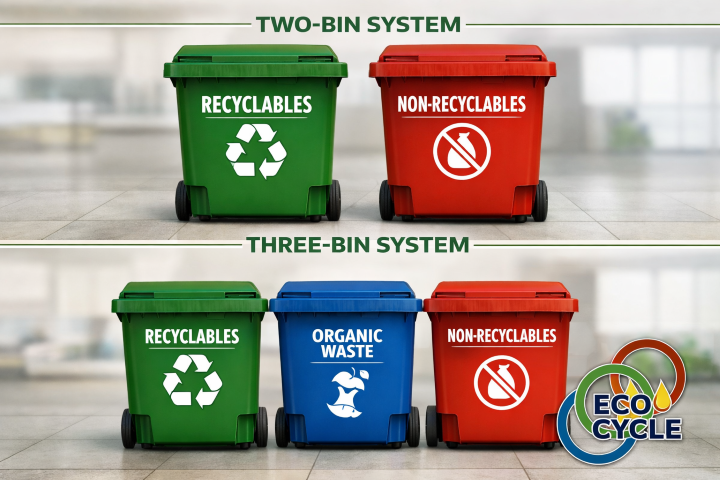
The Two Bin system typically separates waste into two categories: biodegradable waste and non-biodegradable waste. Organic materials such as food scraps, vegetable waste and garden waste are placed in one bin, while plastics, metals and other non-organic materials are placed in another.
This separation allows organic waste to be processed through composting systems while recyclable materials can be directed to recovery facilities.
The Three Bin System
The Three Bin system expands segregation by adding a third category. In most implementations, the bins are used for organic waste, recyclable materials and residual waste that cannot be recycled.
This system improves waste management efficiency by ensuring that each waste stream is handled in the most appropriate way. Recyclables are recovered, organic materials are composted and only a small portion of waste is sent to landfill.
Benefits of Source Segregation
Segregation systems improve the quality of recyclable materials and reduce contamination. When waste is mixed together, it becomes difficult and expensive to separate valuable materials later in the process.
By separating waste at the source, recycling facilities can process materials more efficiently, increasing recovery rates and reducing operational costs.
Environmental Impact
Source segregation also plays an important role in reducing landfill dependency. Organic waste that is composted instead of landfilled produces fewer greenhouse gas emissions and contributes to soil improvement through compost production.
Communities that adopt segregation systems often experience cleaner neighborhoods and higher recycling participation rates.